FTA Announces Phase 2 of E-Invoicing Implementation: What UAE Businesses Need to Know
The UAE moves forward with phase 2 of its E-invoicing rollout, having reached another important milestone.
The Ministry of Finance (MoF), working alongside the Federal Tax Authority (FTA), has confirmed the next phase of the country’s e-Invoicing implementation by issuing ministerial decisions that define who must comply and when. The announcement provides businesses with greater clarity on implementation timelines and reinforces the UAE’s commitment to a fully digital invoicing ecosystem.
UAE businesses should review their accounting systems, ERP platforms, and invoicing processes to prepare for the phased rollout.
What Was Announced?
The Ministry of Finance issued two ministerial decisions covering:
- The scope of businesses required to comply with the UAE Electronic Invoicing System.
- The phased implementation timeline for businesses and government entities.
- The adoption of the international OpenPeppol framework for exchanging electronic
- invoices.
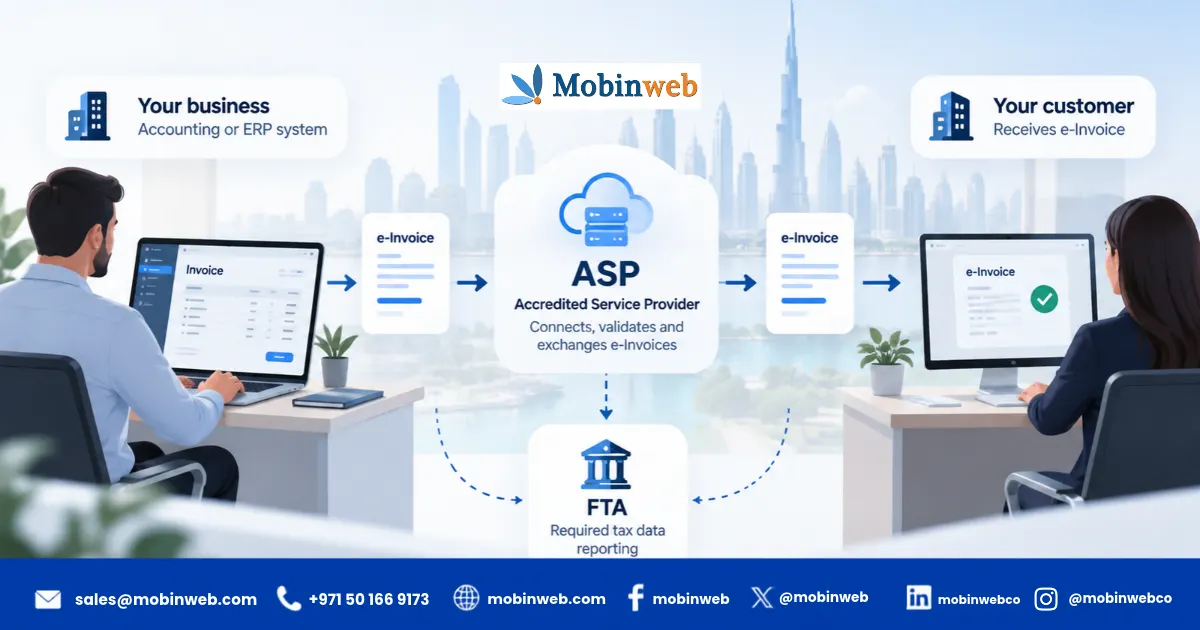
- The requirement to work with an Accredited Service Provider (ASP) when the mandate applies.
The announcement provides businesses with greater certainty as they prepare for mandatory implementation over the coming years.
Who Is Affected?
The Electronic Invoicing System applies broadly to businesses operating in the UAE for business-to-business (B2B) and business-to-government (B2G) transactions, unless specifically excluded under the legislation.
Although implementation is phased, organizations should begin assessing whether their current ERP or accounting software can support structured electronic invoicing.
Key Implementation Timeline
The Ministry of Finance has outlined the phased implementation schedule:
Pilot Programme
Starts: 1 July 2026
Participation is limited to selected businesses invited to join the pilot program.
Phase 1 – Large Businesses
- Businesses with annual revenue of AED 50 million or more must:
Appoint an Accredited Service Provider (ASP) by 31 July 2026.
Begin mandatory e-Invoicing from 1 January 2027
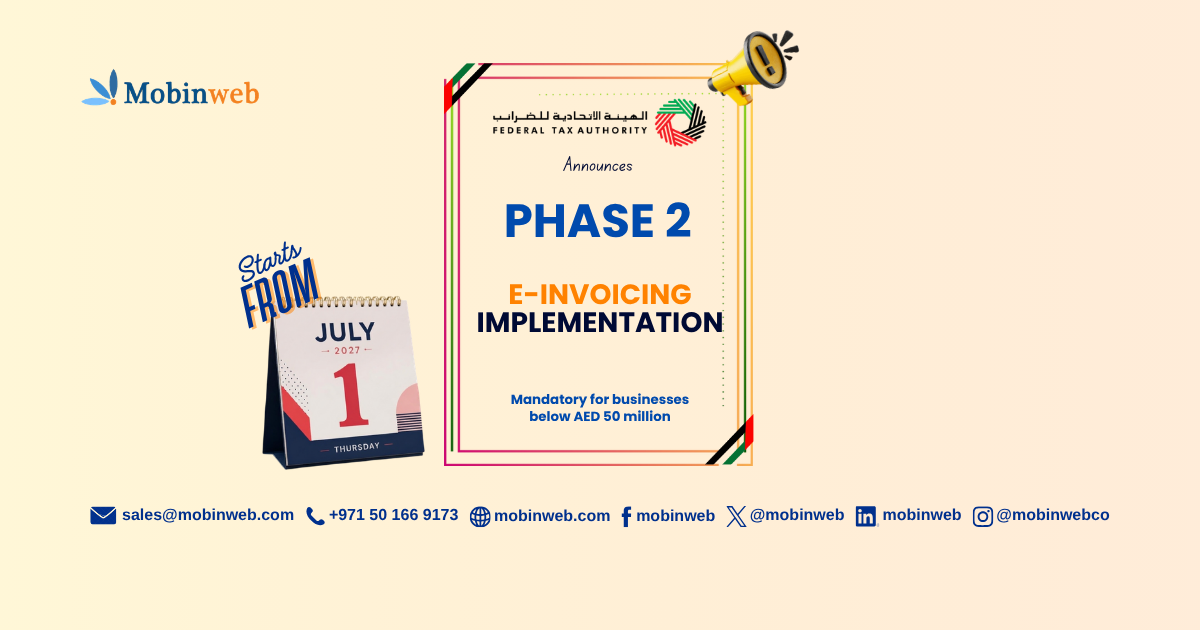
Phase 2 – Other Businesses
- Businesses with annual revenue below AED 50 million must:
Appoint an Accredited Service Provider by 31 March 2027.
Mandatory e-Invoicing begins on 1 July 2027.
Government Entities
Government entities in scope must:
Appoint an Accredited Service Provider by 31 March 2027.
Implement e-Invoicing by 1 October 2027.
Why This Matters for Businesses
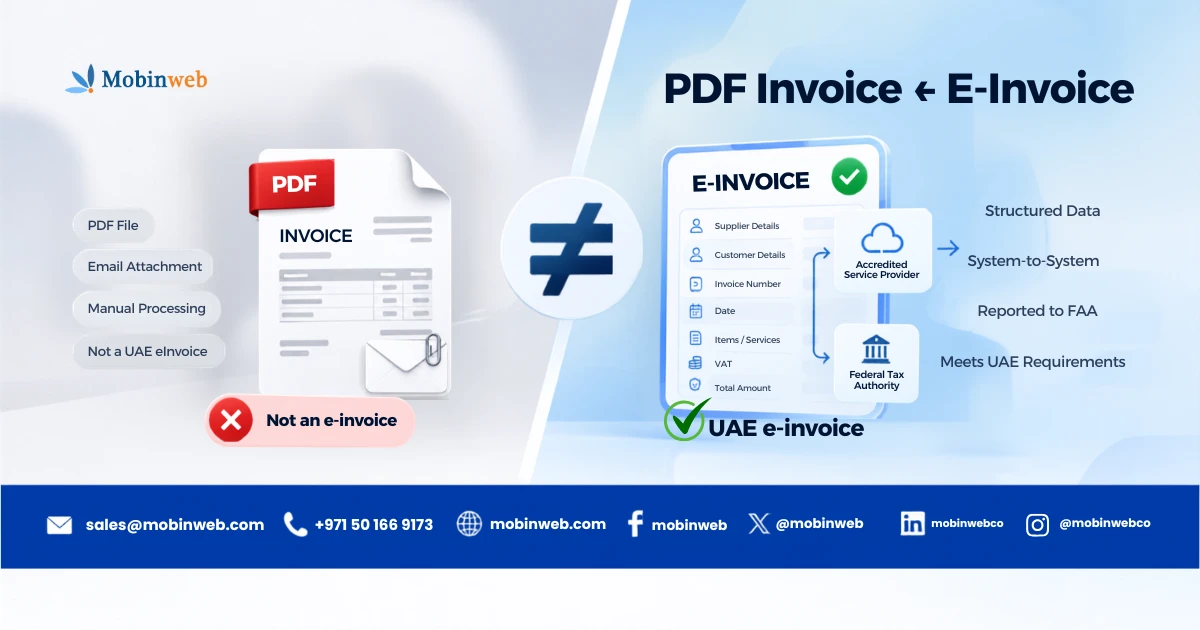
Many organizations still rely on PDF invoices or manual invoicing workflows. Under the UAE’s new framework, electronic invoices will be exchanged in structured digital formats via the OpenPeppol network, enabling invoice data to flow automatically between supplier and buyer systems.
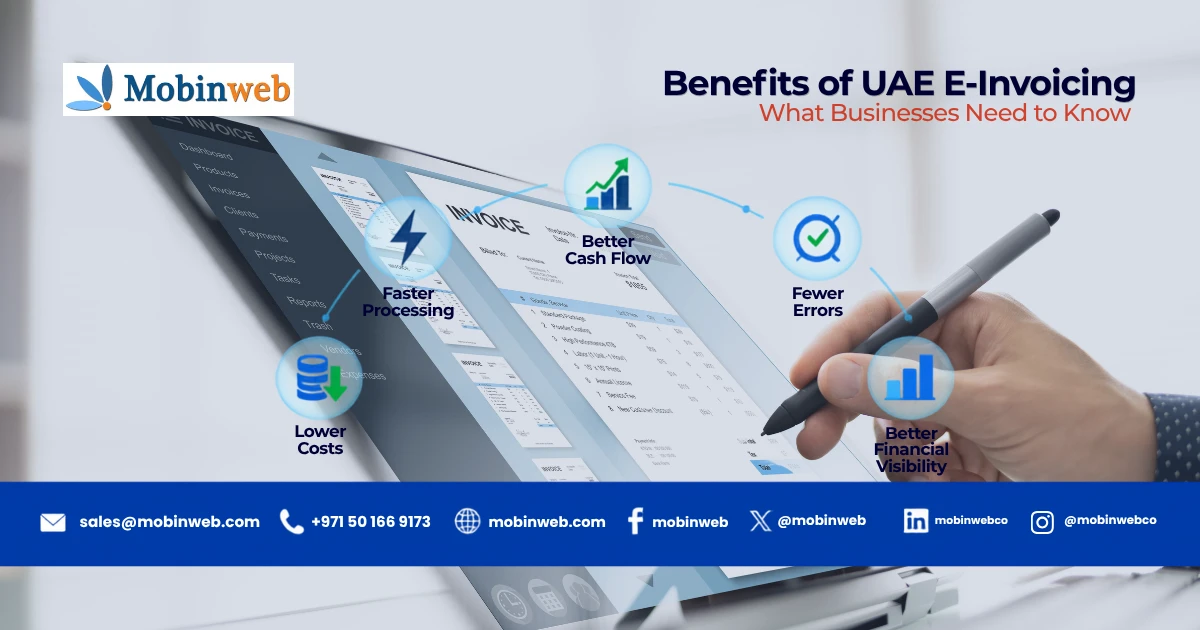
This change aims to:
- Improve invoice accuracy.
- Reduce manual processing.
- Increase tax compliance.
- Strengthen transparency.
- Support faster invoice exchange.
- Enable greater interoperability between business systems.
For businesses using modern ERP or cloud accounting software, the transition involves integrating with an Accredited Service Provider and complying with the UAE’s technical specifications.
What Should Businesses Do Now?
Even if your mandatory implementation date is still some time away, early preparation can make the transition significantly smoother.
Businesses should consider:
- Reviewing current invoicing workflows.
- Confirming whether existing ERP or accounting software supports UAE e-Invoicing requirements.
- Understanding PEPPOL and PINT AE specifications.
- Monitoring updates from the Ministry of Finance and the Federal Tax Authority.
- Planning system upgrades or integrations where necessary.
Organizations that begin planning early will have more time to test integrations, train employees, and avoid last-minute implementation challenges.
Final Thoughts
The UAE’s e-Invoicing initiative is more than a regulatory requirement; it’s part of a broader effort to build a smarter, more connected digital economy. Businesses that begin preparing today will not only be ready for future compliance requirements but will also benefit from more efficient financial operations, improved data accuracy, and stronger collaboration with customers, suppliers, and government entities.
Organizations aiming to modernize their operations can greatly benefit from implementing an integrated business platform like QBM ERP or Bitrix24. These platforms provide a solid foundation for digital transformation that goes beyond just e-Invoicing. As regulations and business technologies evolve, investing in scalable, connected systems will enable organizations to remain competitive, comply with regulations, and prepare for future growth. Contact Mobinweb today!